
Commercial property owners, business operators, and real estate developers face several important decisions when planning the construction of an office, retail space, industrial facility, hotel, or commercial complex. One of the most significant decisions is choosing the right construction contracting model. This decision directly influences the project budget, construction timeline, quality standards, coordination, and allocation of responsibilities.
Two of the most widely used construction approaches are turnkey construction and traditional contractor-based construction. Although both methods can deliver successful results, they differ considerably in terms of project management, accountability, flexibility, and cost control.
Kinematic Structure specializes in the built environment, offering construction-related services, architectural planning, structural planning, and renovation solutions. Businesses planning commercial developments can benefit from understanding these construction approaches before selecting a suitable project delivery method.
Let’s explore the differences between turnkey and traditional contracting and understand which approach may be more suitable for your construction requirements.
1. What Is Turnkey Construction?
Turnkey construction is a project delivery method in which the client appoints a primary contractor to manage the construction process from the initial planning stage to final project handover.
Depending on the agreement, the contractor may handle architectural design, structural planning, procurement, construction, electrical installations, plumbing, finishing, and other associated activities.
For example, a business planning to develop a commercial office building may require several professionals, including architects, structural engineers, electrical engineers, plumbing specialists, and construction workers. Under a turnkey arrangement, these responsibilities can be managed through a single contracting organization.
Key Features of Turnkey Construction
- Single-point responsibility: One primary contractor manages the agreed project scope.
- Simplified coordination: The property owner does not need to independently coordinate multiple contractors.
- Integrated planning: Design, procurement, and construction activities can be managed together.
- Defined project milestones: Completion dates, deliverables, and responsibilities can be established in the contract.
- Convenient project management: The contractor handles day-to-day coordination within the agreed scope.
However, turnkey construction does not automatically guarantee lower costs or faster completion. The results depend on planning, contractor experience, material specifications, and the clarity of contractual responsibilities.
Kinematic Structure understands the importance of proper planning and coordination when businesses consider an integrated construction approach.
2. What Is Traditional Contractor-Based Construction?
Traditional construction involves appointing different contractors and professionals to handle individual project activities. Instead of assigning the entire project to one organization, the property owner independently selects architects, structural consultants, civil contractors, electrical contractors, plumbing specialists, and interior designers.
This approach provides greater control over the selection of professionals, materials, suppliers, and construction activities.
For instance, a commercial developer may appoint an architect to prepare building drawings, invite multiple civil contractors to submit quotations, and separately hire specialists for electrical and mechanical installations.
Benefits of Traditional Construction
Greater control over professionals: Property owners can independently select experienced contractors and consultants.
Flexible procurement: Materials and construction services can be purchased from different suppliers.
Design flexibility: Owners can work closely with architects and consultants to make design-related decisions.
Competitive quotations: Multiple contractors can be approached to compare prices for similar work specifications.
Specialized expertise: Individual professionals can focus on their respective areas of construction.
Despite these advantages, traditional construction requires effective coordination. Delays, communication gaps, and disagreements between different contractors can affect project progress.
Kinematic Structure recognizes that every development has different technical requirements, management expectations, and construction challenges. Therefore, selecting an appropriate contracting method is essential for successful project execution.
3. Turnkey vs Traditional Contracting: Key Differences
Understanding the differences between these construction models helps property owners make informed decisions based on their project requirements.
A. Accountability and Responsibility
In turnkey construction, the primary contractor generally takes responsibility for the entire agreed contractual scope. This creates a single communication channel and makes it easier to identify the party responsible for specific deliverables.
In traditional contracting, responsibilities are distributed among several contractors and consultants. Although this provides greater flexibility, the owner must ensure that each professional understands their duties and coordination requirements.
B. Construction Cost
Turnkey contractors generally provide an overall project quotation based on the agreed scope of work. This can simplify budgeting and financial planning.
Traditional contracting provides greater visibility into individual expenses. However, property owners must also consider consultant fees, procurement expenses, project management costs, and possible additional coordination requirements.
C. Flexibility and Customization
Traditional contracting offers greater flexibility because owners can independently select professionals, suppliers, and materials.
Turnkey construction also allows customization, but changes may require additional approvals, revised quotations, or adjustments to the contractual schedule.
D. Project Supervision
In turnkey projects, the main contractor coordinates the activities included in the contract.
Under traditional contracting, the property owner or appointed project manager generally coordinates different contractors and monitors their performance.
According to Kinematic Structure, understanding these responsibilities is important because successful construction management involves much more than simply appointing a contractor.
4. Cost Comparison: Which Method Offers Better Cost Management?
Construction costs depend on several factors, including land conditions, building design, material selection, labor availability, structural requirements, regulatory approvals, and finishing specifications.
A turnkey contractor may provide a consolidated quotation covering several construction activities. This can make financial planning easier because multiple services are included within one contractual arrangement.
Traditional contracting, on the other hand, allows owners to examine individual expenses and negotiate with different service providers.
However, neither approach automatically guarantees the lowest construction cost.
A comparatively low turnkey quotation may exclude certain services, while separately appointed contractors may initially appear affordable but increase the overall budget through additional management expenses or rework.
For businesses evaluating a construction company in lucknow, comparing the complete scope of work is essential. Kinematic Structure emphasizes the importance of examining project requirements, material specifications, labor costs, and contractual inclusions before making a final decision.
Contingency Allowances and Additional Costs
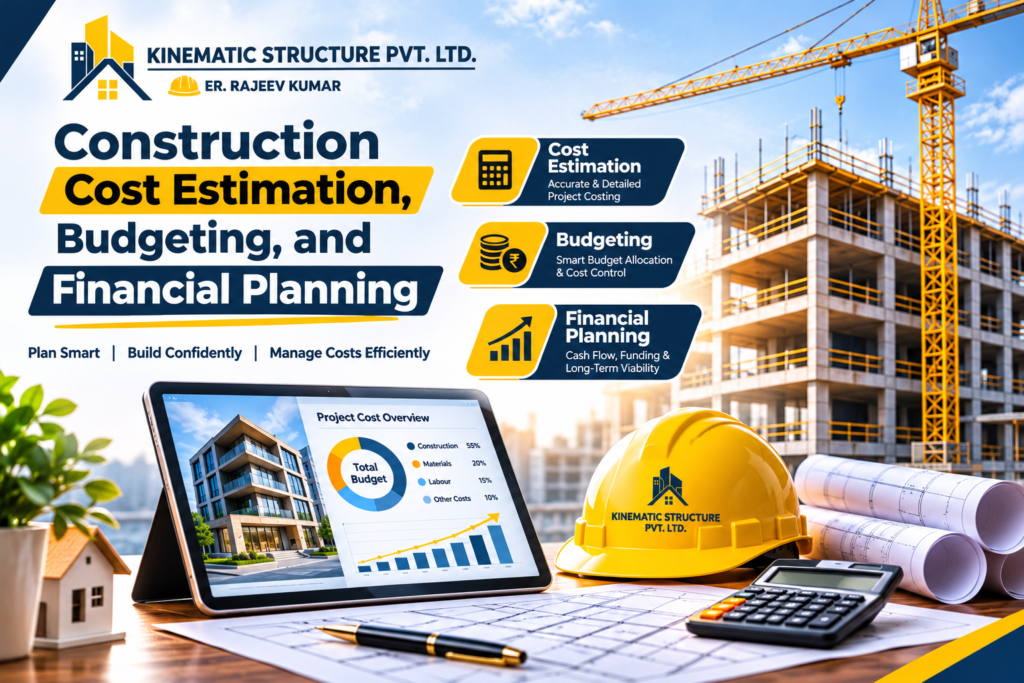
Property owners should also consider unexpected expenses that may arise during construction. These may include changes in material prices, site-related complications, design modifications, and additional work.
A clearly documented contingency allowance and payment arrangement can help reduce financial uncertainty.
The Department of Expenditure’s Manual for Procurement of Works, 2025, also highlights the importance of appropriate specifications, payment arrangements, and contractual conditions in construction procurement.
5. Project Timeline and Construction Coordination
Time management is particularly important for commercial developments. Delays can affect business operations, increase project expenses, and postpone the occupancy or commercial use of a property.
In turnkey projects, design coordination, procurement, and construction activities can be managed under one organizational structure. This may help streamline communication and reduce coordination gaps.
Traditional contracting requires more involvement from the property owner or project management team because different professionals operate under separate agreements.
For example, if an electrical layout is modified after interior wall finishing has started, additional electrical work may become necessary. Similarly, delays in material procurement can interrupt subsequent construction activities.
Kinematic Structure understands the importance of planning, scheduling, and coordination throughout the construction process.
Before appointing a contractor, property owners should review:
- The proposed construction schedule.
- Dependencies between different activities.
- Material procurement timelines.
- Inspection and approval responsibilities.
- Expected project completion dates.
- Procedures for managing delays and modifications.
6. Quality Control and Construction Standards
Neither turnkey nor traditional contracting automatically guarantees superior construction quality. The final outcome depends on the expertise of professionals, material standards, supervision, and quality inspection procedures.
In turnkey construction, property owners should carefully review drawings, material specifications, workmanship standards, and inspection requirements.
Traditional construction allows different specialists to concentrate on individual activities. However, the owner must ensure that their work is properly coordinated.
Important Quality Control Considerations
Architectural and structural drawings: Ensure that approved drawings are properly coordinated before construction begins.
Concrete and reinforcement specifications: Verify the required grades, dimensions, and construction standards.
Material selection: Establish clear specifications for material quality, brands, and performance.
Waterproofing: Ensure that appropriate waterproofing methods are followed in relevant areas.
Electrical and plumbing installations: Review installation standards, safety requirements, and testing procedures.
Site inspections: Conduct regular inspections to identify construction defects and deviations.
Defect correction: Establish a clear process for identifying and resolving workmanship issues.
Final documentation: Maintain inspection records, approvals, and project handover documents.
Kinematic Structure emphasizes the importance of maintaining construction quality through proper planning, technical supervision, and clearly defined project specifications.
7. Which Construction Model Is Suitable for Commercial Projects?
The right contracting model depends on project complexity, available management resources, construction requirements, and the level of involvement expected from the property owner.
When Is Turnkey Construction More Suitable?
Turnkey construction may be appropriate when:
- The owner prefers a single point of responsibility.
- There is limited time available for daily contractor coordination.
- Design and construction activities need to be integrated.
- Project requirements can be clearly documented.
- A unified procurement and management structure is preferred.
- The owner wants to reduce direct involvement in day-to-day construction activities.
When Is Traditional Contracting More Suitable?
Traditional contracting may be preferable when:
- The owner wants independent control over contractor selection.
- An experienced project management team is available.
- Specialized consultants are required for different activities.
- Materials and suppliers need to be selected independently.
- Greater design flexibility and customization are necessary.
- The owner has sufficient construction knowledge to manage multiple service providers.
For example, developers working on specialized industrial or warehouse facilities may prefer traditional contracting if they already have the expertise to coordinate specialist consultants and contractors.
When evaluating a construction company in Allahabad, property owners should consider the nature of the proposed development, site conditions, technical requirements, and preferred construction management approach.
Kinematic Structure encourages businesses to evaluate these factors before selecting a suitable construction arrangement.
8. Practical Checklist for Choosing the Right Contractor
Regardless of the contracting model, careful evaluation before signing an agreement can help prevent misunderstandings, delays, and unexpected expenses.
Property owners should consider the following points:
- Define the scope of work: Prepare a detailed list of activities, deliverables, and exclusions.
- Review architectural and structural drawings: Ensure that all technical drawings are properly coordinated.
- Compare material specifications: Examine material grades, quality standards, and workmanship requirements.
- Evaluate quotations: Compare prices, taxes, labor charges, and additional expenses.
- Establish payment terms: Connect payments with clearly defined construction milestones.
- Set project timelines: Document expected starting dates, completion dates, and important milestones.
- Establish quality standards: Define inspection procedures and acceptable workmanship levels.
- Manage variations: Establish written approval procedures for changes in scope, materials, or pricing.
- Review safety arrangements: Clarify responsibilities for site safety and relevant insurance requirements.
- Define handover conditions: Specify the documentation, inspections, and completion requirements before final handover.
According to Kinematic Structure, proper documentation and transparent communication are essential for maintaining clarity throughout the construction process.
9. Why Choose Kinematic Structure for Construction-Related Requirements?
Selecting a construction partner requires more than comparing quotations. Property owners should also evaluate the company’s service offerings, technical understanding, planning capabilities, and approach to project execution.
Kinematic Structure focuses on the built environment and offers construction-related services, architectural planning, structural planning, and renovation solutions.
Whether businesses are planning a commercial property, residential development, or renovation project, understanding the technical requirements is an important first step.
When evaluating a construction company in Varanasi, property owners should consider factors such as:
- Experience with relevant construction requirements.
- Understanding of architectural and structural planning.
- Ability to assess site-specific challenges.
- Clarity in service scope and project deliverables.
- Approach towards material specifications and quality.
- Communication and coordination throughout the project.
Kinematic Structure aims to help clients understand their construction requirements and identify suitable services based on their development objectives.
Before beginning a project, it is advisable to discuss the proposed building’s purpose, location, approximate area, budget, design expectations, and preferred completion timeline.
10. A Quick Conversation About Selecting a Contractor
Client: Should I choose turnkey construction or appoint different contractors?
Expert Advice: It depends on your project requirements, management capacity, and preferred level of control. Turnkey construction simplifies coordination through a primary contractor, whereas traditional contracting offers greater flexibility but requires more supervision.
Client: What should I check before signing a construction agreement?
Expert Advice: Carefully review the scope of work, architectural and structural drawings, material specifications, payment terms, project timeline, and handover conditions. Kinematic Structure recommends clarifying these details before construction begins.
Client: Is the cheapest quotation always the best option?
Expert Advice: Not necessarily. Always compare the complete scope, material quality, contractor responsibilities, and additional expenses before selecting a construction partner.
Frequently Asked Questions (FAQs)
1. Is turnkey construction better than traditional contracting?
Both methods have advantages. Turnkey construction provides integrated project management and single-point responsibility, while traditional contracting offers greater flexibility and independent contractor selection.
2. Does turnkey construction include architectural design?
It can include architectural design, structural planning, procurement, and construction, depending on the contractual agreement. Property owners should verify the included services before signing.
3. Which construction model is suitable for commercial buildings?
Both approaches can work for commercial developments. The appropriate option depends on project complexity, available management resources, budget, and the owner’s preferred level of involvement.
4. How can I avoid unexpected construction expenses?
Prepare detailed drawings, establish clear material specifications, identify contractual exclusions, and document payment terms and variation procedures before starting construction.
5. What information should I provide during my first construction consultation?
Share the project location, building purpose, approximate construction area, budget, design requirements, expected timeline, and preferred contracting method. This information helps construction professionals understand the project’s requirements.
Conclusion
Choosing between turnkey and traditional contracting is an important decision that can influence the overall success of a construction project. Both approaches offer different advantages, and the right choice depends on the owner’s expectations, budget, technical requirements, and ability to manage construction activities.
Traditional contracting provides greater control over individual professionals, suppliers, and project decisions but requires more coordination and supervision.
Turnkey construction offers an integrated management approach with a single primary contractor responsible for the agreed scope of work. However, the contract must clearly define deliverables, exclusions, quality standards, and payment conditions.
Kinematic Structure provides construction-related, architectural, structural planning, and renovation services for clients with different development requirements.
By evaluating project objectives, technical specifications, and contractor responsibilities carefully, property owners can make more informed decisions and establish a stronger foundation for successful construction.